
See also from Swedish the Swedish the National Board of Social Affairs and Health https://www.socialstyrelsen.se/kunskapsstod-och-regler/omraden/sallsynta-halsotillstand/om-kunskapsdatabasen/sok-bland-sallsynta-halsotillstand/systemisk-skleros/
Systemic sclerosis (scleroderma) is a rare autoimmune disease causing connective tissue hardening and scarring, affecting skin, blood vessels, and internal organs like the lungs, heart, kidneys, and digestive tract. It involves the immune system attacking the body, leading to excess collagen production, which tightens skin and damages organs, often starting with Raynaud’s phenomenon (cold-induced color changes in fingers/toes) and causing symptoms like joint pain, swelling, heartburn, and shortness of breath, with treatments managing symptoms and complications.
Key Characteristics
- Autoimmune: The immune system mistakenly attacks the body’s own connective tissues.
- Collagen Overproduction: Leads to fibrosis (scarring) and thickening of skin and organs.
- Vascular Issues: Abnormalities in small blood vessels are common.
Common Symptoms & Involvement
- Raynaud’s Phenomenon: Fingers/toes turn white, then blue, then red with cold or stress.
- Skin: Thickening, tightening, swelling, especially in hands and feet (sclerodactyly).
- Digestive System: Difficulty swallowing (dysphagia), heartburn, bloating, constipation.
- Lungs: Shortness of breath, cough, scarring, high blood pressure in lungs.
- Heart: Inflammation, arrhythmias, potential heart failure.
- Kidneys: Can cause a severe complication called scleroderma renal crisis, with sudden high blood pressure and kidney failure.
- Joints/Muscles: Pain, stiffness, swelling.
Types of Systemic Sclerosis
- Limited Systemic Sclerosis: Formerly CREST syndrome (Calcinosis, Raynaud’s, Esophageal dysfunction, Sclerodactyly, Telangiectasias).
- Diffuse Systemic Sclerosis: More widespread and rapid skin thickening, often with early organ involvement.
Treatment & Management
- No cure, but treatments manage symptoms and slow progression.
- Medications: Immunosuppressants, corticosteroids, NSAIDs.
- Managing organ complications (e.g., blood pressure meds for kidney/lung issues).
- Lifestyle: Keeping warm, avoiding triggers for Raynaud’s
BvS: We will here discuss Quantum Tunneling and coherence and their possible role in the development of hardening healthy organ/systems/cells .. with and (perhaps) independent of the critical important function of the mitochondria, which has a long evolutionary history of billions of years (probably 3,2) and play a critical role in all living organisms!
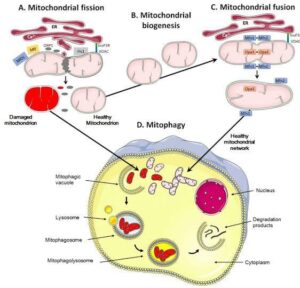
“You’re right: mitochondria have their own DNA (mtDNA) and are crucial for cellular energy (ATP) production, so their dysfunction, caused by mutations or defects, severely impacts health, leading to a vast array of diseases, including neurodegenerative disorders (Alzheimer’s, Parkinson’s), cardiovascular issues, metabolic conditions (diabetes), cancer, and even developmental problems, by creating energy crises, oxidative stress, and disrupting cell signaling.
Mitochondria & Their DNA
- Energy Factories: Mitochondria generate most of the cell’s energy (ATP) and are essential for life.
- Separate Genome: They possess their own small, circular DNA (mtDNA) that codes for some mitochondrial proteins, though most are encoded by the nuclear genome.
- High Demand: Cells in high-energy organs (brain, heart, muscles) have thousands of mitochondria, highlighting their vital role.
How Dysfunction Leads to Disease
- Energy Crisis: Impaired mitochondrial function leads to reduced ATP, starving cells of energy.
- Oxidative Stress: Defective mitochondria overproduce reactive oxygen species (ROS), damaging cells.
- Cell Death Pathways: Dysfunction can trigger apoptosis (programmed cell death).
- Vicious Cycle: Defects in mtDNA or nuclear genes affect mitochondrial proteins, creating a cycle of worsening function.
Diseases Linked to Mitochondrial Dysfunction
- Neurological: Alzheimer’s, Parkinson’s, developmental disorders.
- Cardiovascular: Heart disease, stroke.
- Metabolic: Diabetes.
- Other: Cancer, age-related decline, hearing/vision loss, kidney/liver dysfunction.
In essence, when these ”powerhouses” fail, the entire system suffers, making mitochondrial health central to preventing and managing numerous chronic illnesses.